
Mobility Drills for Climbers
Mobility is the ability to move or be moved freely and easily. In fitness and climbing, it’s your body’s ability to move with control through a full, functional range of motion.
When you work on mobility, you’re also working on flexibility and stability. Without enough flexibility, you can’t even reach certain positions. Without stability, you can’t engage your body to use those positions effectively. Think about holding a drop knee, sticking a high heel hook, or engaging your shoulders for a powerful gaston—each one depends on a mix of mobility, flexibility, and stability.
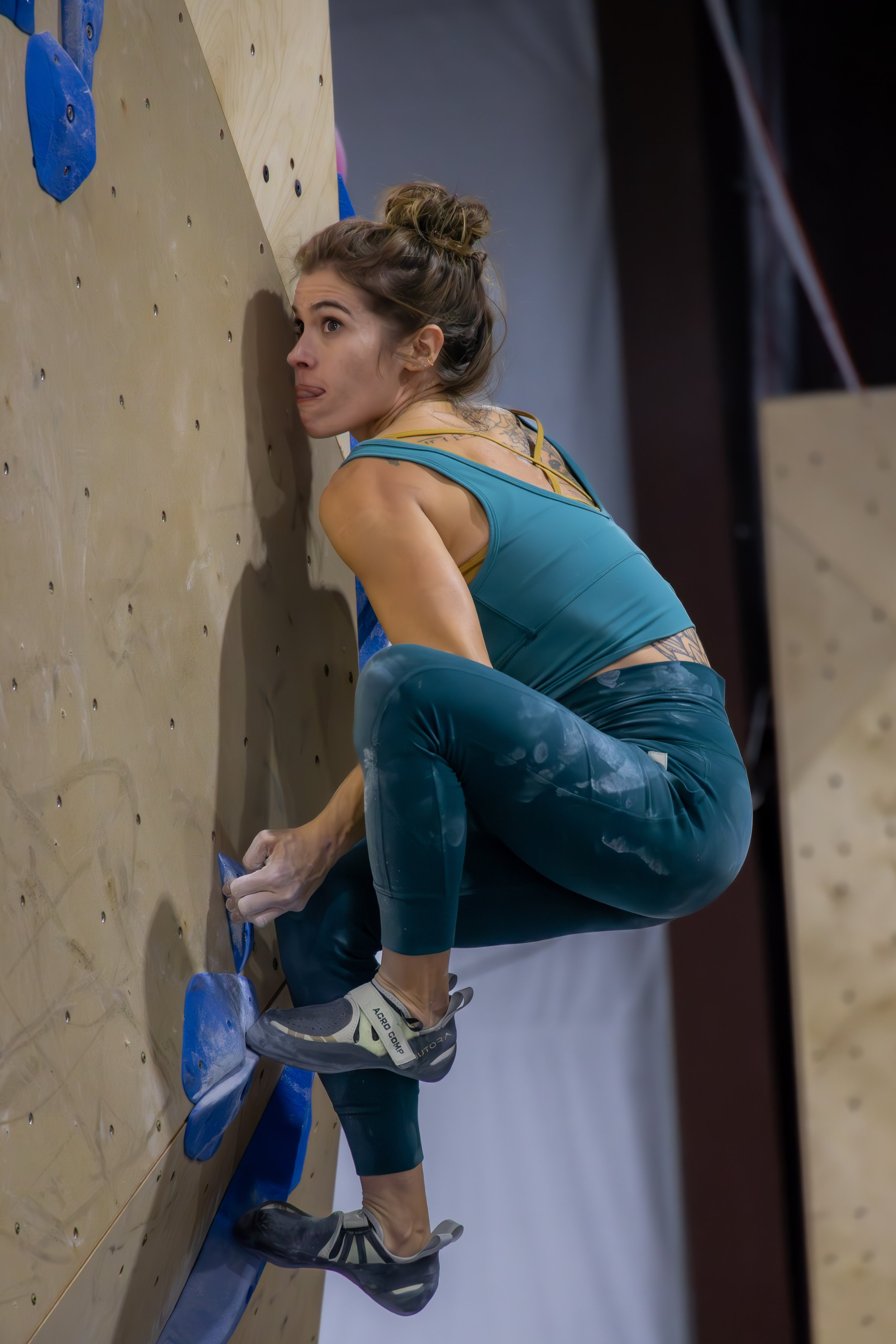
Below are targeted mobility drills to improve your climbing performance and reduce your risk of injury, with a focus on the shoulders and hips.
Shoulder mobility drills for climbers
Shoulder mobility helps you access more extreme positions with less strain on your muscles and tendons. Being more mobile also improves activation and makes your movements more economical, supporting both performance and injury prevention.
1. Doorway stretch
This drill opens up your chest and shoulders.
Stand in a doorway and place your forearms on the doorframe.
Lean your body forward until you feel a stretch across your chest and the front of your shoulders.
Change the angle of your arms:
Slightly above 90°
At 90°
Slightly below 90°
Each position targets different parts of the shoulder and chest.
Hold each position for 20–30 seconds, breathing steadily.
2. Scapular pull-ups
Scapular pull-ups strengthen and mobilize the muscles around your shoulder blades and can double as a workout.
Hang from a pull-up bar with your arms straight.
Without bending your elbows, gently pull your body upward by depressing and retracting your shoulder blades—like a controlled shoulder shrug.
Pause briefly at the top, then lower back down with control.
If you can’t do this with your full body weight, loop a band around the bar and under your feet or knees to assist. As you get stronger, you can add weight to increase the challenge. This is an excellent warm-up for both climbing and pull-ups.
Hip mobility drills for climbers
Mobile hips help you stabilize your lower body on the wall, place your feet in high or wide positions, and keep your body close to the wall. Many hip drills also recruit your core and glutes, which further improve tension and control.
3. Gate openers and closers
This dynamic warm-up drill improves balance and range of motion.
Stand tall with your core engaged.
Lift one knee toward your chest, keeping your foot flexed.
Rotate your hip to move the knee out to the side—this is opening the gate.
Bring your leg back to center and place your foot down.
To close the gate, reverse the motion: lift your knee out to the side, then rotate it back toward the center before lowering your foot.
Keep the movement smooth and controlled, and maintain good posture to improve hip mobility without compromising alignment.
4. Frog stretch
The frog stretch targets your inner thighs and hips, improving flexibility and opening up a wider range of motion.
Start on all fours with your hands under your shoulders and knees under your hips.
Slowly slide your knees out to the sides as far as is comfortable.
Rotate your feet so the inner arches and the insides of your knees stay in contact with the floor.
Lower your forearms to the ground, keeping your elbows under your shoulders and your back straight.
Allow your hips to sink toward the floor.
Hold for up to 60 seconds, breathing deeply and letting your hips sink a bit lower with each exhale—as long as it remains comfortable.
5. Single-leg frog stretch
This variation of the frog stretch targets one side at a time for a deeper stretch.
Begin in a similar position as the frog stretch: on your forearms, with your knees roughly under your hips.
Extend one leg straight out to the side while keeping the other leg bent.
Keep your hips centered under your torso so your body stays aligned.
Gently shift your weight slightly forward, back, or side to side to explore different angles in the stretch—staying controlled the whole time.
Repeat on both sides, aiming to stretch each side as evenly as possible.
6. 90/90 hip rotations
The 90/90 position targets both internal and external hip rotation, which is especially useful for movements like drop knees.
Sit tall with your back straight.
Bend both knees to 90 degrees, so one leg is in front of you (external rotation), and the other is to the side (internal rotation).
Keep your feet planted and your torso facing forward.
Rotate your hips to switch sides, bringing both legs through the middle until they’re reversed (the back leg becomes the front leg and vice versa).
Maintain the 90-degree angles and avoid letting your feet slide.
If a certain point in the rotation feels tight, pause and hold that position for 20–30 seconds to turn it into a stretch. Aim for about 10 controlled rotations back and forth.
Foam rolling and self-myofascial release
Many climbing gyms have foam rollers available. Foam rolling is a form of self-myofascial release: it targets tight muscles and fascia, helps break up knots, increases blood flow, and can enhance your range of motion.
Although rolling out your muscles can improve mobility, it’s still important to pair it with active mobility drills and strength work. Use foam rolling to prepare your muscles for movement and support recovery, but not as a complete replacement for training.
Bringing it all together
Your body has over 600 muscles, and stretching and mobilizing them can significantly improve your overall health and performance as a climber. Focusing on the shoulders and hips is a powerful starting point for preventing injuries and building strength that actually translates onto the wall.
Choose a few of these drills to use as part of your warm-up and cool-down routine. With consistent practice, you’ll likely notice easier high steps, more comfortable drop knees, stronger heel hooks, and a lower risk of overuse injuries over time.