
Why Climbers Should Lift Weights
By Kaylee Woodford:
Climbing is an incredible full-body sport. It builds grip strength, body awareness, mobility, and problem-solving all at once, so it’s easy to assume climbing alone is enough.
But if you want to climb stronger, longer, and with fewer injuries, lifting weights deserves a place in your routine.
Climbing excels at developing coordination, technique, and finger strength. What it doesn’t always build evenly is general strength, especially in larger muscle groups. Weight training fills those gaps. A stronger foundation allows you to apply your technique more effectively.
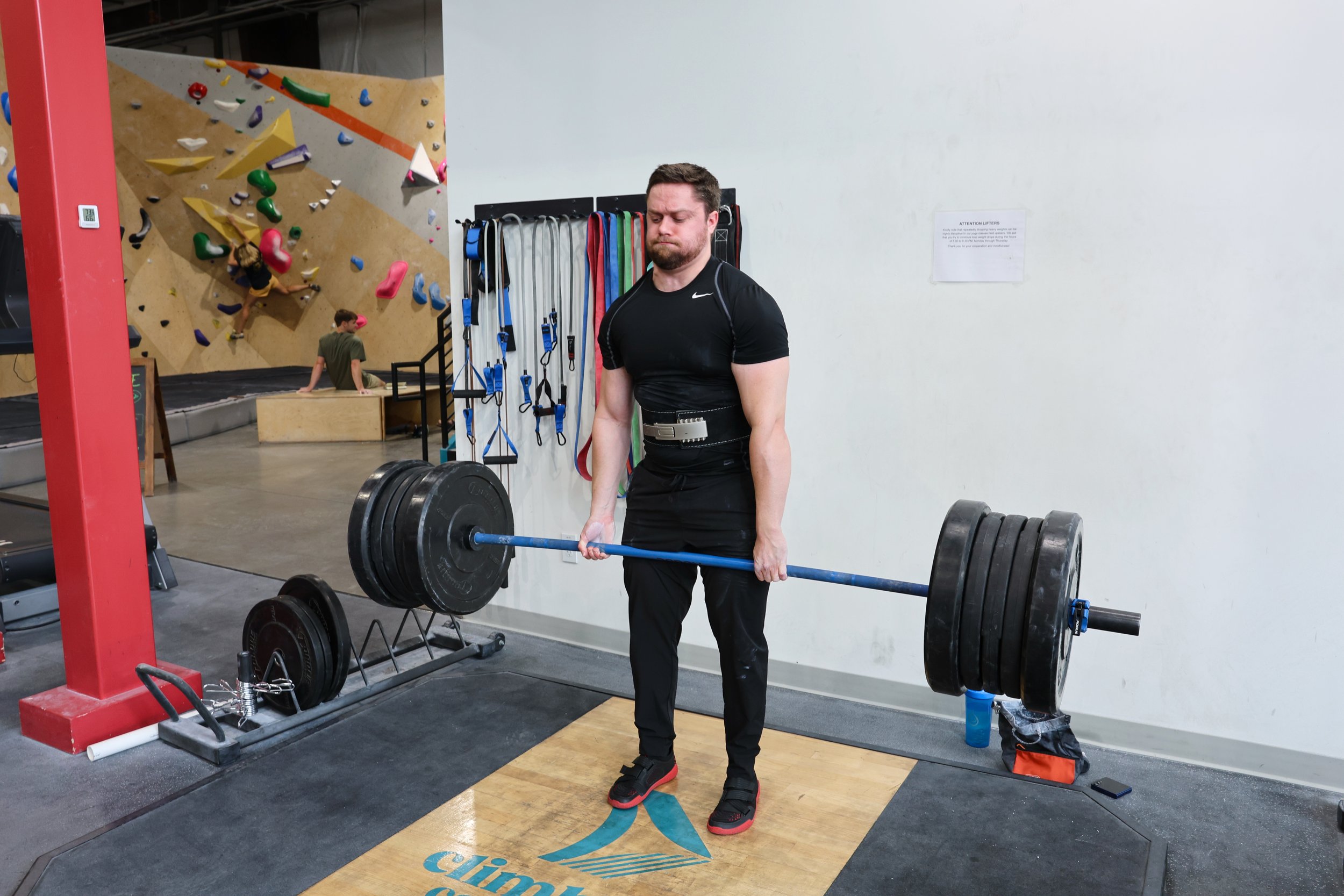
Climbers are prone to overuse injuries. Fingers, elbows, shoulders, and hips take a beating over time. Strength training helps by:
Balancing muscle development
Strengthening connective tissue
Improving joint stability
Reducing strain on fingers and elbows
A well-rounded lifting routine can be the difference between climbing consistently for years and being sidelined every season.
One of the biggest fears climbers have about lifting is gaining “too much muscle.” The reality is:
Climbing + lifting builds functional strength, not bodybuilding mass
You control volume, intensity, and goals
Significant muscle gain requires intentional training and nutrition, not casual strength work
When done through a full range of motion, strength training improves mobility, resilience, and long-term joint health; making it one of the best tools for injury prevention.
Climbing will always be the best way to get better at climbing. But lifting weights makes you more resilient, more powerful, and better prepared for everything the wall throws at you.
If your goal is longevity, performance, and fewer setbacks, strength training isn’t optional, it’s supportive.
Climb smarter. Lift strong. Send harder.
