
How to Fit Climbing Shoes
Picking out the right climbing shoe is a balancing act between the type of climbing you do and the unique shape of your feet. For most people, the gold standard for fit is "snug but not painful." You want to eliminate "dead space" (empty air pockets in the heel or toe box) because any movement inside the shoe will cause you to slip off small holds. When trying shoes on, remember that leather uppers will stretch up to a full size, while synthetic materials hardly stretch at all. A great tip is to shop in the evening when your feet are naturally slightly swollen, ensuring you don't buy a pair that becomes agonizing during a long session.
The profile of the shoe, or its "last," determines how it performs on different angles of rock. Flat-lasted (neutral) shoes allow your toes to lie flat, making them the most comfortable choice for beginners or all-day multi-pitch trad climbing. Downturned (aggressive) shoes have a hook-like shape that scrunches your toes into a powerful "talon" position. This is essential for overhanging routes or steep bouldering where you need to "pull" with your feet, but they are generally too uncomfortable for vertical walls. Between these two are moderate shoes, which feature a slight curve that offers a versatile middle ground for technical face climbing and gym sessions.
Support and sensitivity are dictated by the stiffness of the sole. Stiff shoes use thicker rubber and a rigid midsole to create a stable platform, which is perfect for "edging" on tiny ripples of rock and small plastic footchips in the gym and supporting your foot muscles as they get stronger. In contrast,soft shoes use thinner rubber to provide high sensitivity, allowing you to "feel" the rock and smear your feet across large volumes or slabby surfaces. Your choice of closure, velcro or lace is largely about convenience versus customization. Velcro is the favorite for boulderers who take their shoes off between every attempt, while laces are preferred for long routes or "weird" foot shapes because they allow you to micro-adjust the tension from the toe to the ankle.
For youth climbers, as feet grow, here are some things to keep in mind:
Comfort is king: Unlike adult performance shoes, kids' shoes should fit snugly but not painfully. A relaxed fit is preferred to prevent foot deformities and keep the experience fun.
Growing room: Since kids' feet grow quickly, it's acceptable to buy shoes about a size too big. Look for shoes with features like adjustable heel straps that can accommodate growth over time.
Flat profile: Choose shoes with a neutral or flat last (shape). This puts less strain on growing tendons and ligaments compared to aggressive, downturned shoes.
Easy closure system: Velcro (hook-and-loop) closures are ideal. They are easy for kids to put on and take off by themselves and allow for quick adjustments. Avoid laces until they are older or more advanced.
Durability vs. performance: Thicker rubber soles (4-5mm) are better for beginners as they last longer and provide more support. As skills progress, thinner rubber offers more sensitivity.
Specific features: Look for a wide toe box to avoid squashing toes and a narrow heel to prevent the shoe from slipping off.
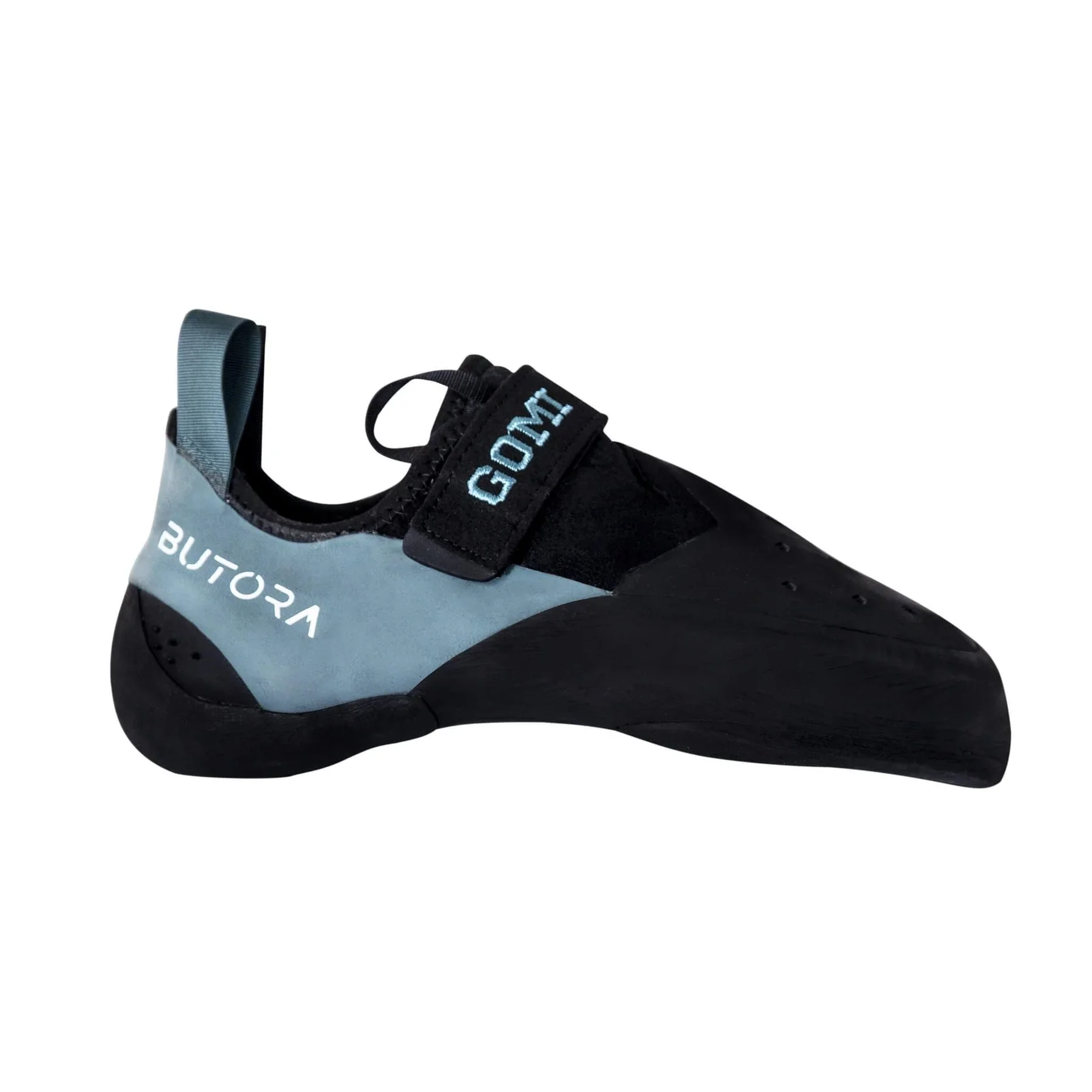
At Climbing Collective, we currently sell the Butora line of shoes and think that they offer a great balance between value, price and performance. For climbers that spend equal time in the gym and outside, we think the Endeavor (both wide and narrow) are a great place to start, and for a more performance oriented shoe that equally works on all types of terrain, the Gomi is a very popular offering that not only performs well, but is extremely comfortable, right out of the box.