
Why Beginner Bouldering Works for Team Building
When morale is low, another pizza party usually is not the answer. If Q1 missed the mark or Q2 has been full of hiccups, your team is probably feeling it. Rising costs, tighter budgets, and everyday stress can wear people down fast. While we cannot fix the cost of living overnight, we can create better ways for people to reconnect with the coworkers they rely on every day.
That is exactly why a beginner bouldering class can be such an effective team-building activity.
Let’s be honest: most teams are not excited by the usual options anymore. A few slices of pizza and a bottle of soda do not magically improve morale. Bowling may work for some groups, but it does not feel fresh. And those sky-high ropes courses are a hard sell when someone on the team—possibly the general manager—is terrified of heights.
Bouldering offers something different. It is active, social, and challenging without being overwhelming. It gives teams a chance to try something new together, support one another in real time, and learn how each person responds to pressure, feedback, and small wins.
A beginner bouldering class can help teams:
step outside their comfort zones in a controlled environment
practice encouragement and collaboration naturally
build confidence through shared problem-solving
connect through a challenge that feels fun instead of forced
I have taught many beginner bouldering classes over the years, and I have seen firsthand how quickly they bring people together. In my experience teaching beginner classes, teammates often start cheering each other on, sharing ideas, and noticing strengths they may not see in the office. Here’s why that matters.
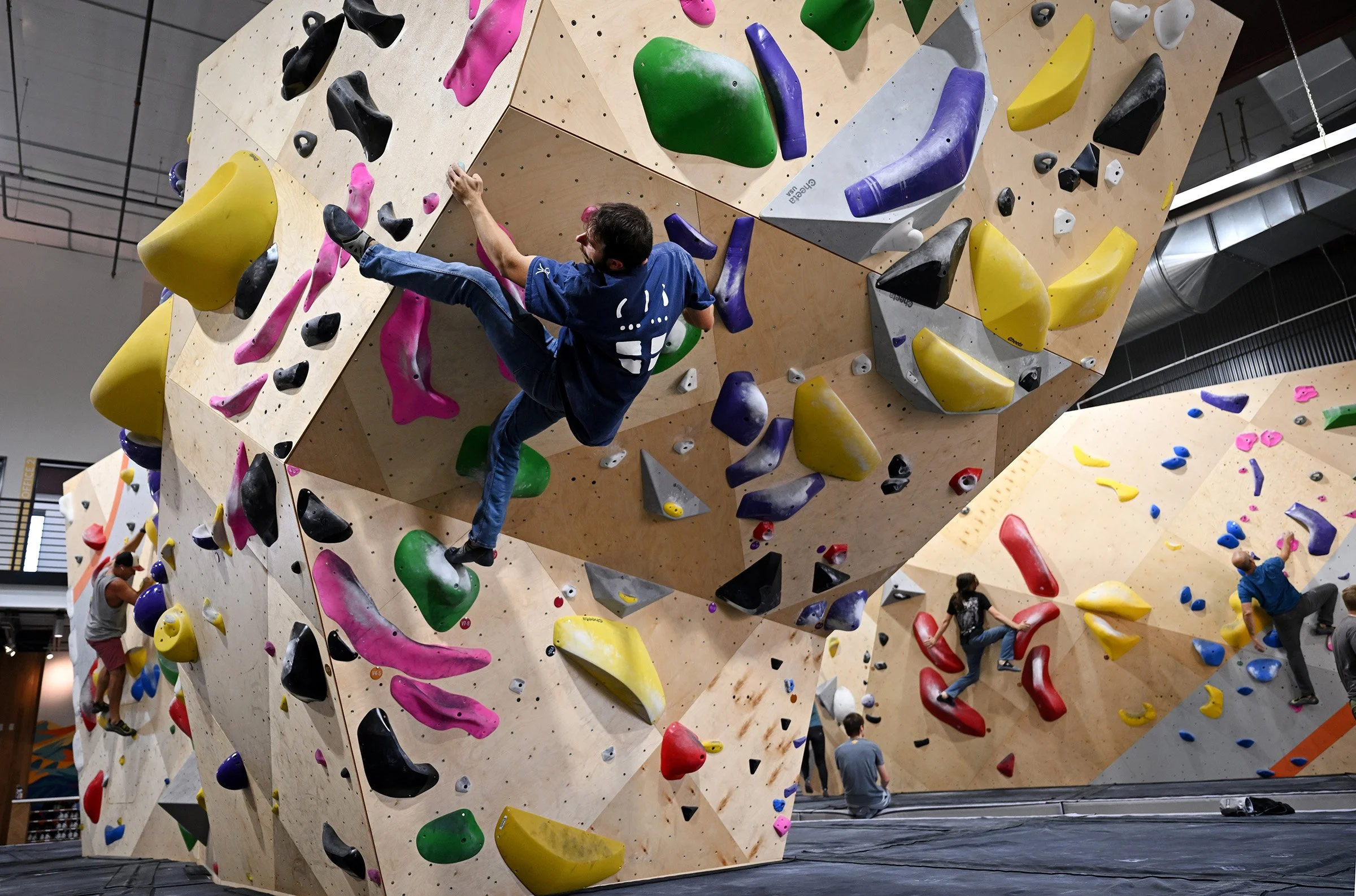
It Gets People Out of Their Comfort Zones
Let’s start with the obvious question: will everyone on your team fall in love with climbing after one class? Probably not.
Most people do not enjoy being pushed outside their comfort zone right away. But with the right instruction, that discomfort can become one of the most valuable parts of the experience. Bouldering gives people a controlled environment where they can test their limits, try something unfamiliar, and learn how they respond.
Can they push for one more move, or do they prefer to take a step back and think through the problem first? Do they ask for help, observe others, or try to solve things on their own? How do they respond to coaching or feedback in the moment?
A beginner class can reveal all of that surprisingly quickly. It gives team members a new way to understand themselves and each other, which can carry over into how they communicate and collaborate at work.
It Builds Encouragement and Collaboration
One of the best things about teaching beginner bouldering is watching people realize they do not have to figure everything out alone.
It’s common for climbers to talk through problems together, compare ideas, and share beta while working through moves. In a team-building setting, that kind of collaboration happens naturally.
When I teach, I often ask the group what challenges might come up on a route and what options they see. That does two things at once: it helps people learn how to sequence a climb, and it shows them how useful it is to share a perspective someone else might miss.
Encouragement matters just as much. Positive reinforcement is part of good instruction, but it also sets the tone for the entire group. Once one person starts cheering for a teammate, others usually follow. That creates an environment where support feels normal, not forced.
And that is part of what makes climbing so effective for teams. People remember what it feels like to be encouraged during a difficult moment. They also remember how much difference it makes when they offer that same encouragement to someone else.
It Creates a Healthy, Shared Challenge
Bouldering is not easy, and that is exactly why it works.
No matter whether someone is the tallest person in the office or the smallest, climbing asks them to combine strength, balance, mobility, and problem-solving. It is a real challenge, but it is also one that gives people a clear sense of progress.
That challenge often becomes the most rewarding part of the class. People leave feeling proud that they tried something new. They notice that they adapted, stayed with the problem, and learned more than they expected—not just about climbing, but about themselves.
That kind of shared challenge can give teams a useful reference point back at work, even if the effect varies by group. It will not automatically change how a team communicates, but it can open up new ways for people to encourage one another and talk through challenges together.
The lesson is not that climbing magically fixes workplace stress. It is those shared challenges that help people build confidence, resilience, and trust. Those skills do not develop unless people have a chance to practice them.
Bouldering as a Team Builder
A lot of people assume bouldering is not for them. They think it is too hard, too intimidating, or simply not the right time to try something new. But that is often exactly why it works as a team-building activity.
A beginner bouldering class gives people a way to blow off steam, discover a new hobby, and connect with coworkers outside the usual work setting. More importantly, it creates a shared experience that feels energizing instead of obligatory.
So the next time you are looking for a team-building activity, consider booking a beginner bouldering class. Your team might walk in feeling unsure, but there is a good chance they will leave more connected, more confident, and more willing to cheer each other on.