
Most climbing gyms offer several yoga classes for members. Power Flow, Zen, Align, Restore—whatever the name, there is usually something happening in that dreaded, dark yoga room. But can yoga actually improve your climbing performance?
It can, as long as you use it to complement climbing rather than replace time on the wall. Yoga can support three areas that matter to climbers: mobility, breathing, and recovery.
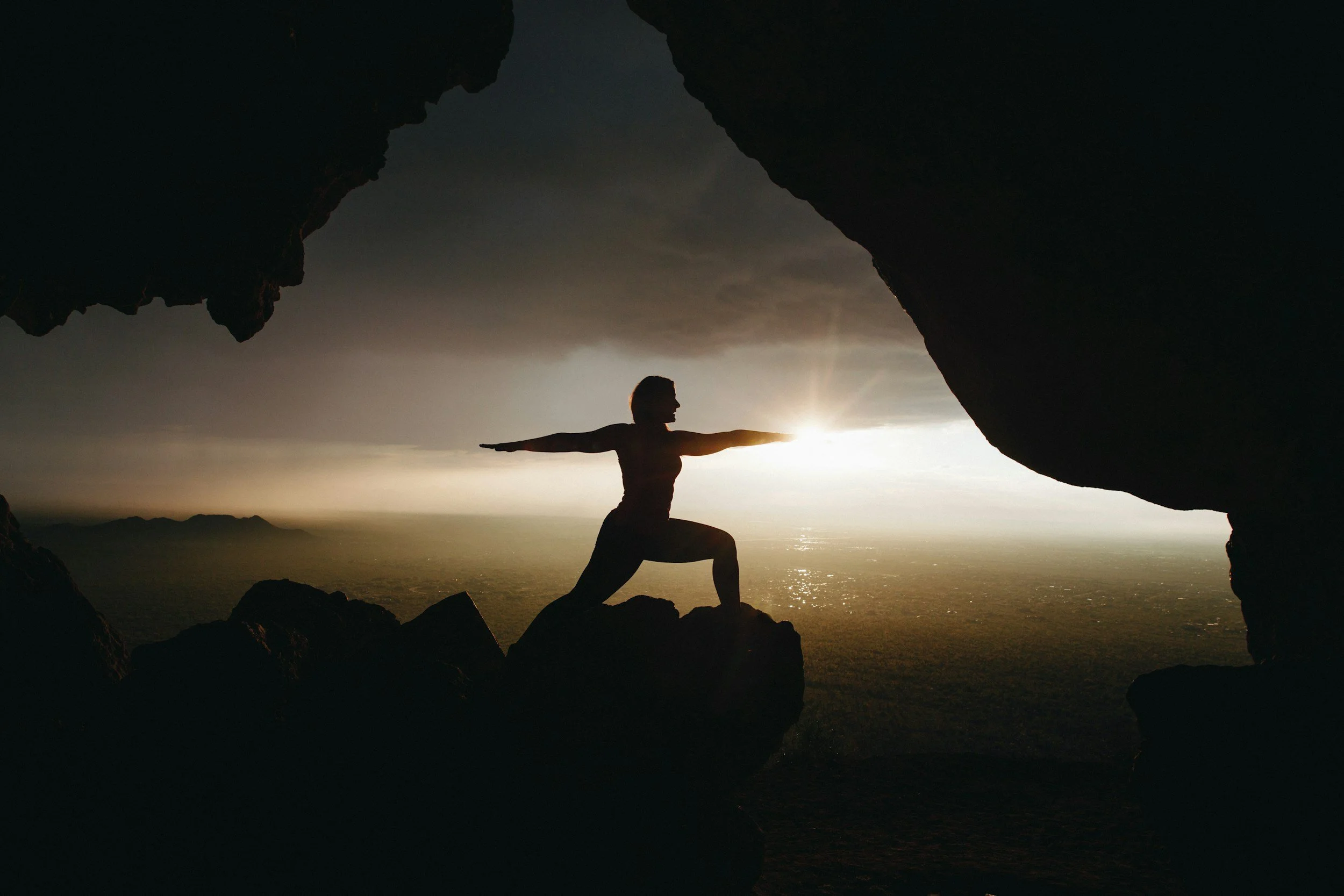
The Overlap Between Climbing and Yoga
As climbers move into intermediate and advanced grades, it is easy to focus almost entirely on finger strength. Hangboarding and strength training have their place, but they only take you so far. Flexibility and mobility matter, too—especially when you are working on slab technique, setting a heel hook, or trying to stick a dynamic move.
Climbing demands mobility and control through the hips. Yoga can help develop both by guiding you through deep, sustained positions that many athletes otherwise avoid. Working near your current end range of motion in a controlled setting can help you learn to move through that range with more confidence. An instructor can also provide form cues to help you stay aware of alignment and control.
Over time, that work may make it easier to:
Find stable positions on slabs.
Set and hold heel hooks.
Shift your weight from one side of your body to the other.
Stay comfortable in deep, strenuous positions.
Move through sequences that require more hip mobility.
Yoga is not the only way to improve mobility. However, classes are accessible and often included with a gym membership. That combination makes yoga an underrated addition to a climbing-training routine.
Breathing

Most climbers eventually catch themselves holding their breath. At a crux that requires intense tension—or during a large dynamic move—it is easy to tense up, forget to breathe, and come down huffing and puffing after the attempt. Stress, anxiety, and habit can all contribute. Yoga offers a practical way to become more aware of your breathing and practice controlling it under pressure.
Yoga asks you to focus on when to inhale and when to exhale, even while holding difficult positions. Instructors often give specific breathing cues, and that awareness can carry over to climbing. On a lead route, deliberate breathing can help you stay composed during rests and manage effort between hard sections. In bouldering, it can help you pace yourself through a crux or finish instead of rushing while tense.
Controlling your breath will not make a difficult climb effortless. It may, however, help reduce panic and preserve energy. That can matter on an intense boulder problem or a long route where every bit of endurance counts.
Recovery

As we get older—and as our training load increases—recovery becomes more important. I know there have been times when I got home from a projecting session and woke up the next day feeling insanely tight and sore, as if my joints needed WD-40. That is a normal part of being active, especially as we age. While yoga can sometimes look like glorified stretching, it can also be a useful recovery activity for climbers.
In a study published by the National Library of Medicine that examined student athletes from Mae Fah Luang University, the authors write, “Yoga’s combination of postures, breathing, and relaxation may further activate the parasympathetic system, making it a promising tool for sports recovery.” The abstract notes that the twenty football club athletes who practiced yoga and stretching after strenuous HIIT activity experienced decreased respiratory rates as early as five minutes afterward. The study also notes, “The role of breathing, rhythmic muscle contractions, and deep relaxation in yoga appears to facilitate the recovery phase more effectively than stretching alone. This suggests incorporating yoga as an active recovery regimen.”
This is only one study, and it used a relatively small, specific sample. It is not definitive proof that yoga will improve recovery for every climber. However, it does suggest a useful direction: by engaging the parasympathetic nervous system—the rest-and-digest side of the nervous system—yoga may support the body’s transition out of a highly stressed state.
Use yoga to facilitate recovery or supplement your training. No, it will not be a magic spell that lets you send V7 when your project is a V4. But it may help you feel less sore, handle strenuous positions on the wall, and move with more mobility.
Conclusion
Yoga will not replace climbing. The only activity that directly trains climbing performance is climbing itself. Cross-training works best when it supports a specific need: running can build cardiovascular endurance for longer routes, strength training can balance muscle groups, and coordination-heavy activities can challenge hand-eye coordination.
Yoga can play a similar supporting role for mobility, breathing, and recovery. To try it without overcomplicating your training:
Choose a class that matches your experience level.
Let the instructor know that you climb and mention any areas that need attention.
Add yoga around your climbing sessions rather than using it in place of them.
Pay attention to how your mobility, breathing, and soreness change over time.
Give yoga a try, even if your mobility is below average. With consistency, you may notice the benefits before you realize how much has changed.