
How to Ace Your First Belay Test
Your first belay test may feel intimidating. You have to remember several steps, communicate clearly, and show an instructor that you can manage risk while keeping your climbing partner safe. Feeling nervous is normal, and it often means you understand how much responsibility belaying involves.
The goal of a belay test is not to catch you out or make you fail. It is to confirm that you understand the process and can perform each step safely. With focused practice, you can walk in feeling calm, prepared, and ready to show what you know.
What to Expect During Your Belay Test
Every climbing gym has its own policies, but most belay tests cover the same core skills. You may be asked to:
Put on your harness correctly and check that it fits securely.
Tie into the rope using the figure-eight knot your gym teaches.
Complete a partner check before anyone leaves the ground.
Load and use your gym's preferred belay device.
Demonstrate proper belay technique, including keeping your brake hand on the rope.
Catch a simulated fall.
Lower your climber slowly and under control.
The instructor is watching more than whether you can recite each step. They are also looking at how deliberately and confidently you perform it. Did you double-check your knot? Did you communicate with your climbing partner? Did you keep your brake hand on the rope throughout the test?
Take your time. Moving carefully shows that you understand the process, while rushing can lead to mistakes. Climbing gyms want people to pass their belay tests, but they also need to know that every belayer can manage these responsibilities without constant supervision.
Skills to Practice Before Test Day
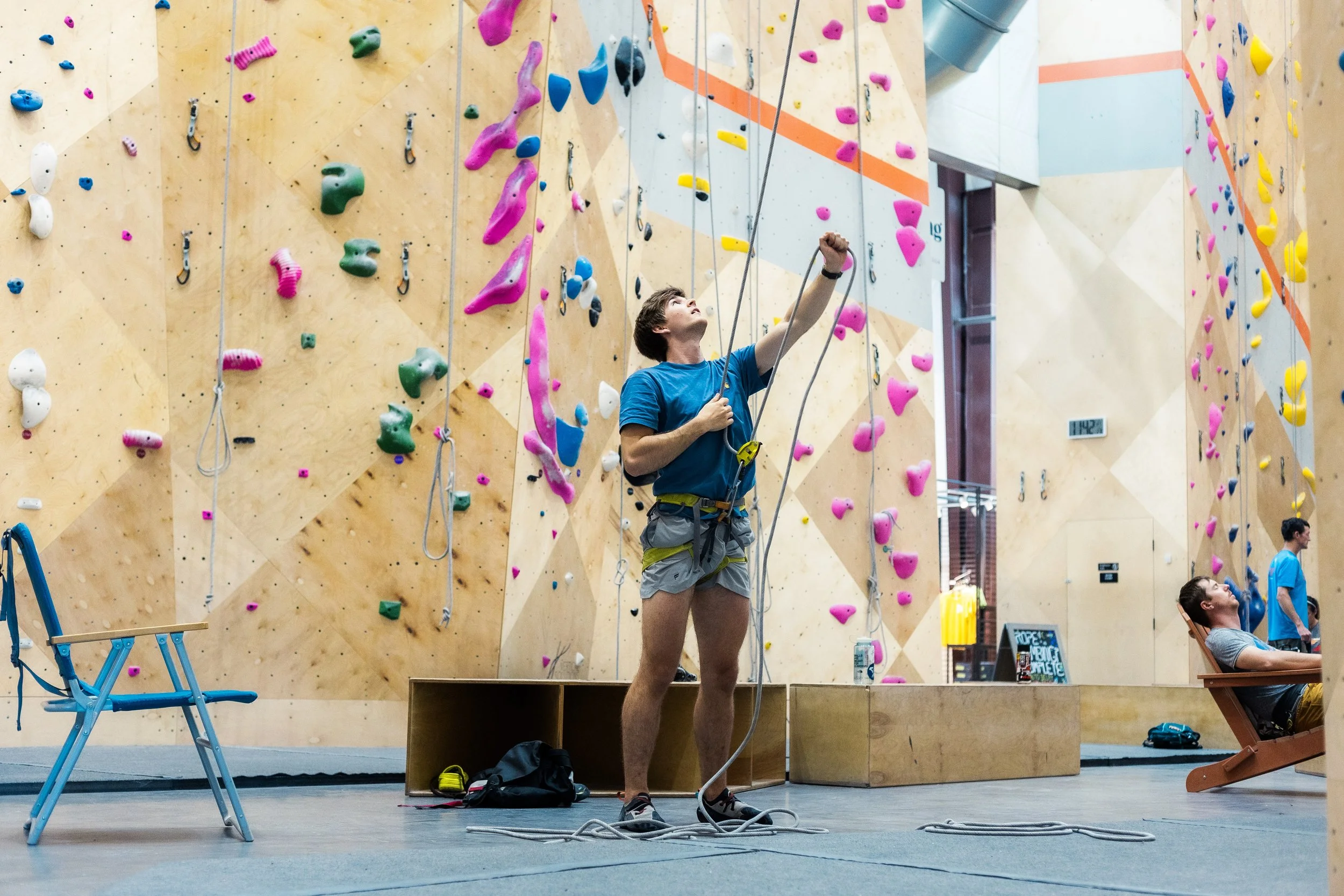
The best way to prepare is repetition. If your gym offers a belay class, pay close attention and ask questions whenever a step is unclear. After class, practice while the information is still fresh.
Focus on these skills:
Knots and equipment: Practice your figure-eight knot and learn to recognize an incorrectly tied knot, a twisted harness, or a belay device that is loaded incorrectly.
Belay technique: Practice the hand movements your gym teaches until they feel controlled and consistent. Keep your brake hand on the rope at all times, including while lowering.
Communication: Review commands such as “On belay?”, “Belay on,” “Climbing,” and “Climb on.” Say them clearly and wait for the appropriate response.
Partner checks: Before every climb, check your partner's harness, knot, belay device, and carabiner. Make this a habit rather than something you remember only for the test.
You can review these steps with a friend, practice the terminology with flashcards, or walk through the sequence in your head. The goal is not to rush through a memorized script. It is to build habits that help you notice simple mistakes before anyone leaves the ground.
Common Mistakes That Can Cause Failure
Equipment mistakes can cause a test to stop before you reach the belay portion. A twisted harness or incorrectly loaded belay device may be an automatic failure at some gyms, so check your setup before you begin.
Another serious mistake is releasing the brake strand while belaying. No belay device replaces correct technique. Keep your brake hand on the rope throughout the climb and during the lower, following the hand position and movement your gym instructor taught you.
It is also easy to forget a partner check or skip verbal commands when you are nervous. Slow down, communicate clearly, and use the same safety checks every time. A consistent routine is easier to follow than a last-minute scramble to remember what comes next.
What Happens If You Do Not Pass?
Not passing your belay test is not the end of the world. In my experience, many climbers need more than one attempt. If an instructor asks you to practice before trying again, treat that feedback as a roadmap rather than a judgment.
Ask which specific steps need work, then practice those skills before returning. Most importantly, do not rush the process. Climbing is built on trust, and every climber who ties into your rope is trusting you with their safety. Taking an extra day or two to practice is far better than earning certification before you are ready.
Final Tips for Acing Your First Belay Test
Your first belay test may be daunting, but preparation makes it much more manageable. Practice your knots, equipment checks, communication, belay technique, and controlled lowering. On test day, move deliberately and follow your gym's exact procedures, even if they differ from this general overview.
Stay calm, trust your training, and ask questions when you are unsure. Your instructor wants you to succeed, and the goal is to help you become a safe, confident belayer. With repetition and a steady routine, you will be ready to ace your first belay test.