
Climbing Gear: What to Wear for Comfort and Safety
Rock climbing gives you a lot of freedom to express yourself, both on and off the wall. Unlike many sports, there’s no single “right” outfit. What you wear is mostly about comfort, confidence, and personal style.
Still, some choices make climbing more comfortable and safer than others. Knowing what to look for in your clothing can help you feel prepared when you tie in or step onto the wall.
Start with clothes you can work out in
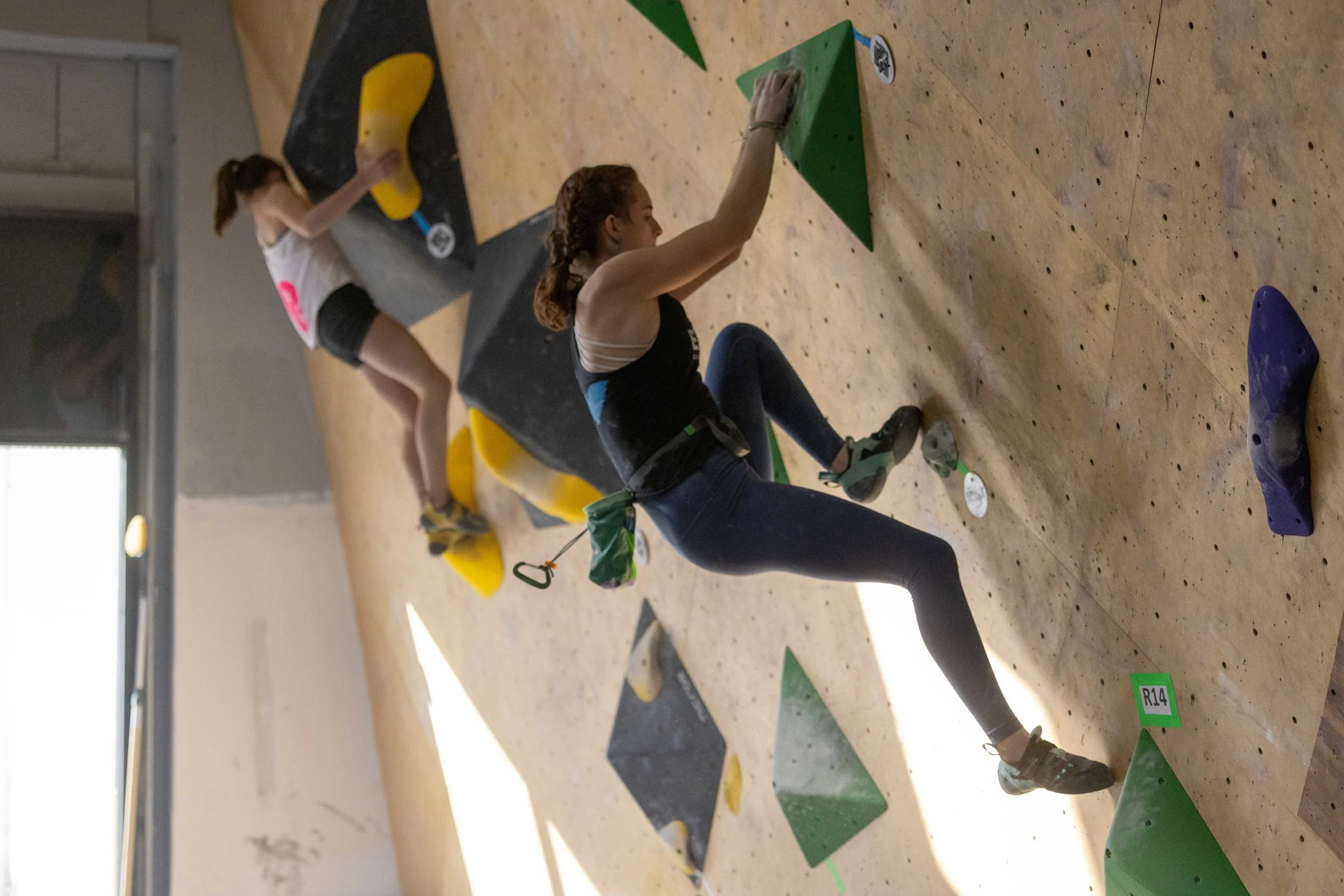
If you can comfortably work out in it, you can probably climb in it. Look for pieces that:
Let you move freely
Breathe well and don’t trap heat
Don’t chafe or dig in when you’re reaching, twisting, or sitting in a harness
When your clothes support your movement instead of distracting you, it’s easier to stay focused on the climb.
Prioritize breathable, moisture-wicking fabrics
Climbing is a full-body workout, and your heart rate can climb quickly on longer routes or harder problems. Breathable fabrics help regulate your temperature and manage sweat so you stay comfortable.
Look for athletic materials that:
Wick moisture away from your skin
Dry quickly between attempts
Feel light and flexible rather than heavy or clingy
When your clothing breathes, you’re less likely to overheat or feel weighed down mid-route.
Choose clothes that stretch with you
High steps, wide stems, drop-knees, and dynamic moves all demand a full range of motion. Your clothing should move with you, not against you.
Prioritize bottoms and tops made with stretchy fabrics so you can:
Lift your knees high without resistance
Twist and reach without feeling restricted
Avoid seams that pull tight or feel like they might rip
Restrictive or stiff clothing can cut a session short—sometimes literally, if seams fail at the wrong moment.
Dress for wearing a harness
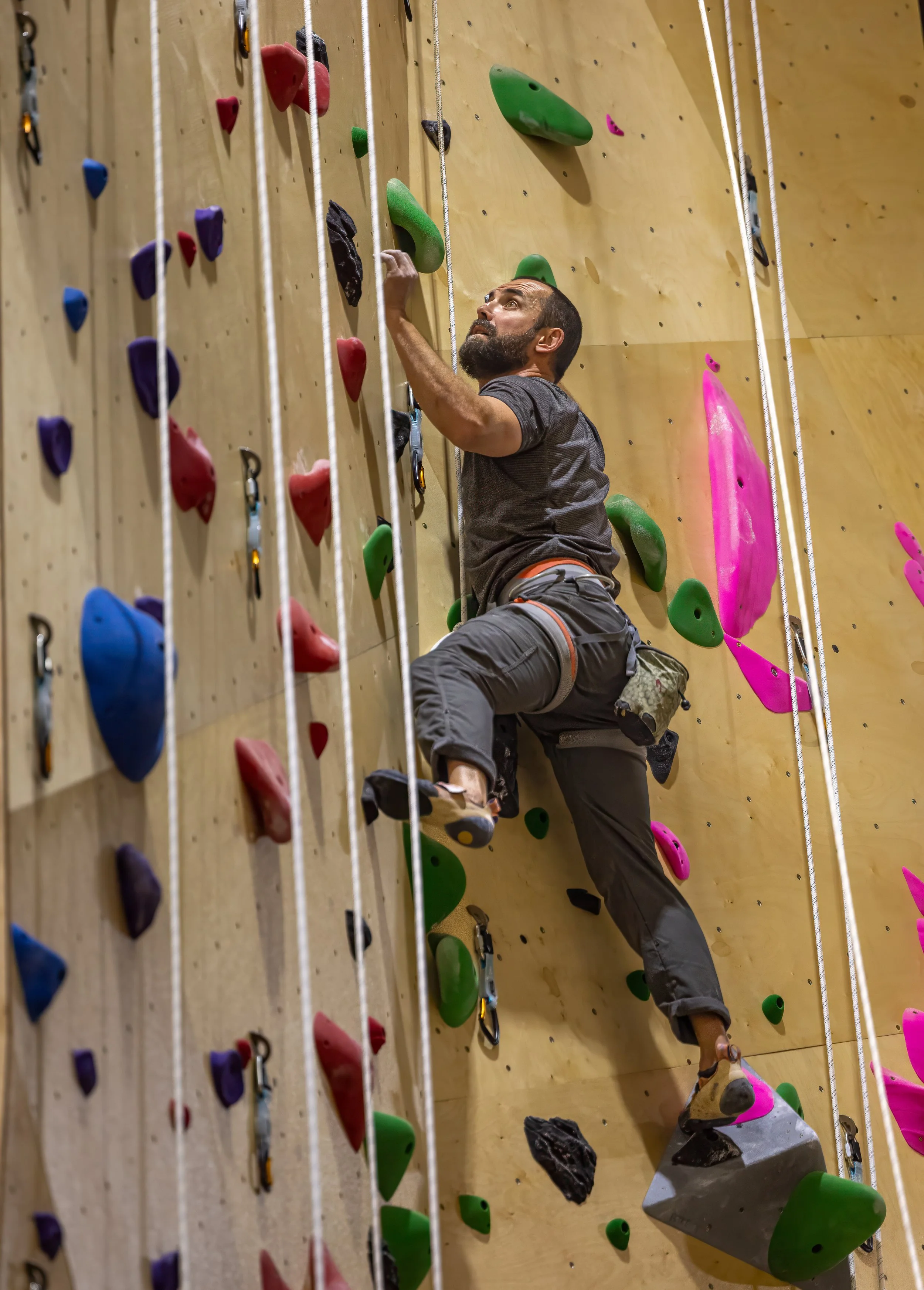
If you’re rope climbing, your harness should factor into what you wear.
Keep in mind:
Harness leg loops can rub against bare skin, especially during longer sessions.
Very short shorts may leave skin exposed where the leg loops sit, which can be uncomfortable.
Many climbers prefer knee-length shorts or full-length pants for better coverage under a harness.
Comfort is personal, and there’s no universal rule—if shorter shorts feel great for you while top roping, that’s fine. Just make sure your outfit still allows you to move freely and wear your harness safely.
Remove jewelry to avoid injuries
Jewelry, especially rings, can create real safety risks on the wall.
Rings can:
Scratch or damage climbing holds and walls
Get bent or broken if they catch on something
Cause severe injuries if they snag during a fall
In extreme cases, a ring caught on a hold while your body keeps moving can lead to degloving or even the loss of a finger. To avoid this, store rings safely in your bag before you climb.
The same goes for large or dangling necklaces, bracelets, and earrings. Anything that can catch on holds or equipment is better left off for the session.
Climb in what makes you feel confident
At the end of the day, the best climbing outfit is the one that helps you feel both comfortable and confident. For some people, that’s pajama pants and a tank top. For others, it’s leggings, a sports bra, or a button-down and jeans.
Climbing celebrates individuality and self-expression. Professional climbers show this all the time—Hamish McArthur, for example, famously sent a V17 outdoors in a button-down shirt and jeans. His success is a reminder that confidence and comfort can matter just as much as technical clothing.
As long as your outfit doesn’t limit your movement or introduce safety risks, wear what makes you feel good in your own skin, be considerate of those around you, and enjoy expressing yourself on and off the wall.